Best for
Who should buy it
Readers focused on sleep, recovery, and passive data collection.
 Our Method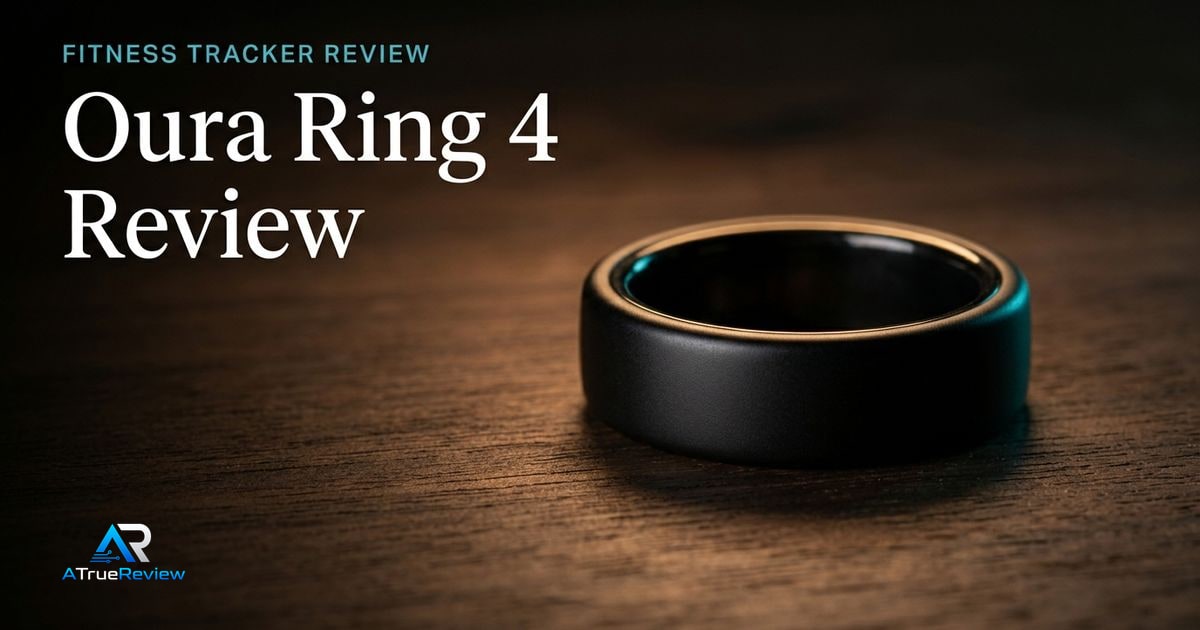
Wearable review
A review of Oura Ring 4 as a low-friction recovery tracker, focused on sensors, comfort, battery life, membership dependency, and whether the subscription is worth paying for.
Verdict
Recommend with caveats
The strongest low-friction recovery-tracker candidate, but final judgment needs direct sleep, comfort, and subscription-value testing.

Best for
Readers focused on sleep, recovery, and passive data collection.
Skip if
You want full workout controls, maps, smartwatch notifications, or a tracker that does not depend on an app/membership experience.
Test window
Launch brief based on Oura support documentation and external review context. Hands-on wear testing is still required before final scoring.
Specs
Key findings
The Oura Ring 4 is the cleanest answer to a specific question that became common around the same time smartwatches got crowded: how do you collect 24/7 sleep and recovery data without putting another demanding screen on your wrist? Oura’s answer — a titanium ring with hidden sensors that asks nothing of you except wearing it and occasionally charging it — is genuinely different from every other wearable on the market.
It is not a fitness tracker in the Garmin or Apple Watch sense. It is a passive recovery and sleep instrument. Once you understand which one you want, the buying decision gets easy.
The product shape is the point. Oura’s official support documentation describes Ring 4 as a fully titanium ring with recessed interior sensors and Smart Sensing — red and infrared LEDs for blood oxygen during sleep, green and infrared PPG sensors for heart rate / HRV / respiration, a digital temperature sensor, and a 3-axis accelerometer for movement and activity. Battery life runs 5–8 days; charging takes 20–80 minutes depending on ring size; water resistance covers sauna and water sports.
For the right buyer, the no-screen, no-notification, no-daily-charge form factor is not a limitation — it is the entire feature. Sleep and recovery data are collected passively while you live your life. You check the app when you want to, not when it buzzes.
The app data, after a couple of weeks of baseline collection, becomes useful. Trends in sleep duration, sleep stages, HRV, resting heart rate, and temperature deviation are presented in a way that actually shapes behavior. Oura’s editorial framing — readiness scores, recovery context, cycle tracking — has been refined across multiple ring generations and is among the most readable in the category.
That is the real pricing question. The ring hardware matters, but the product is really the ring plus the app plus the interpretation layer. If the buyer is not going to use readiness, sleep staging, trend analysis, and recovery framing, the value of the membership drops fast.
For readers who want passive data translated into a simple daily signal, the membership makes sense because it is the part that turns measurements into decisions. For readers who already know their routine, distrust wellness scoring, or mainly want raw workout stats, the ongoing cost is harder to justify against Garmin or even a simpler habit-tracking approach.
Two real limitations matter for buying decisions.
Oura collects data well. It does not motivate workouts, control music, run apps, or replace a smartwatch. If you wanted any of those, the answer is something else.
— The honest framing
First, the subscription. Oura Membership is required for most of the insights that make the platform worthwhile — without it, the ring shows you basic data but loses trend analysis, readiness scoring, detailed sleep staging, and most of the editorial framing. Treat the membership as part of the product cost when comparing prices to other wearables.
Second, fitness coverage. There is no GPS, no heart-rate alarms during exercise, no detailed strength-training metrics, and no way to control music or notifications. Workout detection happens automatically but is limited compared to a dedicated fitness watch. Athletes who train structured will want to pair Oura with a Garmin, Apple Watch, or chest strap for the training side.
Before any final scoring, the site needs to test multi-week wear comfort, sizing accuracy, app reliability, subscription value, activity detection across a range of workouts, battery life by ring size, and how useful the insights feel after the novelty fades.
Three real alternatives serve different buyers:
The Whoop 4.0 is the closest philosophical sibling — same 24/7 recovery focus, also subscription-only, no display. Different form factor (wrist strap), different daily routine (battery pack swap instead of overnight charging on a stand). Athletes often prefer Whoop for the wrist-based heart-rate broadcast to cardio gear.
The Apple Watch Series 10 is a different category entirely — full smartwatch features, notifications, apps, ECG, fall detection, daily charging. The right pick if you want a wrist computer that also tracks fitness. Wrong pick if you want passive recovery tracking without distraction.
The Garmin Venu 3 is the strong-fitness-with-no-subscription alternative — multi-day battery, detailed workout tracking, no monthly fee, less polished recovery framing than Oura.
The Oura Ring 4 wins when you want passive 24/7 data collection on a device that disappears socially, and when you are willing to pay for the membership to unlock the insights.
For shortlist context around that decision, the best fitness trackers guide shows where Oura sits relative to Garmin and WHOOP, the fitness-trackers category narrows the wearable-only layer, and the wider wearables hub helps buyers decide whether the real need is a tracker, a sleep setup change, or a broader health-tech system. For a complete sleep-and-recovery setup, the Eight Sleep Pod 4 review covers the bedroom-level upgrade. For office focus and call audio, the Bose QuietComfort Ultra handles concentration; for the laptop side, the Framework Laptop 13 is a sustainable pairing; for a phone that looks distinctive, the Nothing Phone 3.
If you want passive 24/7 sleep and recovery tracking on a device that disappears socially, with the patience for a couple of weeks of baseline collection before the insights become useful, the Oura Ring 4 is the right answer. If you want full smartwatch functionality, the Apple Watch Series 10 or Garmin Venu 3 is the honest alternative. If you train structured and want detailed workout metrics, pair Oura with a dedicated fitness watch rather than expecting the ring to do it all.
The provisional verdict: the strongest current low-friction recovery-tracker recommendation, contingent on multi-week comfort testing and whether the insights stay useful after the novelty fades. Final score depends on real-world wear and subscription-value evaluation. For shortlist context, route back through best fitness trackers, fitness trackers, or the wider wearables hub.
Verdict shape
Pros
Cons
Alternatives
FAQ
For the insights that make Oura worthwhile, yes. The bare ring without the membership shows you basic data but loses the trend analysis, readiness scoring, sleep stage breakdowns, and most of the editorial framing that makes the platform useful. Treat the membership as part of the product cost when deciding.
Only partially. Oura is excellent at passive sleep and recovery tracking. It is competent but not class-leading at workout tracking — there is no GPS, no heart-rate alarms during exercise, no detailed strength-training metrics. If you do structured training, pair Oura with a Garmin, Apple Watch, or chest strap for the workout side. If you train casually, Oura alone is enough.
Among the most accurate consumer wearables for sleep, based on independent comparisons against polysomnography. Stage detection is not perfect, but trend data over weeks is reliable enough to act on. For a bedroom-level upgrade pairing, see the [Eight Sleep Pod 4 review](/reviews/eight-sleep-pod-4-review/).
For most people, no — the ring disappears within a week. The two situations where it can: (a) if you sleep with that hand under your head, the ring presses against your face; (b) if your finger swells overnight (heat, salt, alcohol), a tight fit becomes uncomfortable. Use the sizing kit before buying, and err half a size larger if your fingers fluctuate.
Same recovery-and-sleep philosophy, different form factor. Oura is a ring, Whoop is a wrist strap. Oura battery life is multi-day and charges occasionally; Whoop is meant to be worn continuously and swapped to a charging battery pack. Oura works better for office and dressy environments where a wrist strap looks out of place. Whoop works better for athletes who want a wrist-based device with a heart-rate broadcast option for cardio gear.
Typically 5 to 8 days, charging in 20 to 80 minutes depending on size.
Yes. An Oura Membership is required for most insight features.
Red and infrared LEDs for SpO2, green and infrared PPG for heart rate, HRV, and respiration, a digital temperature sensor, and a 3-axis accelerometer.
It is water-resistant to 100 m, fine for sauna and water sports but not diving.
US sizes 4 to 15; a sizing kit ships first.