Best for
Who should buy it
Readers with demanding routines who are willing to pay for sleep consistency and recovery quality.
 Our Method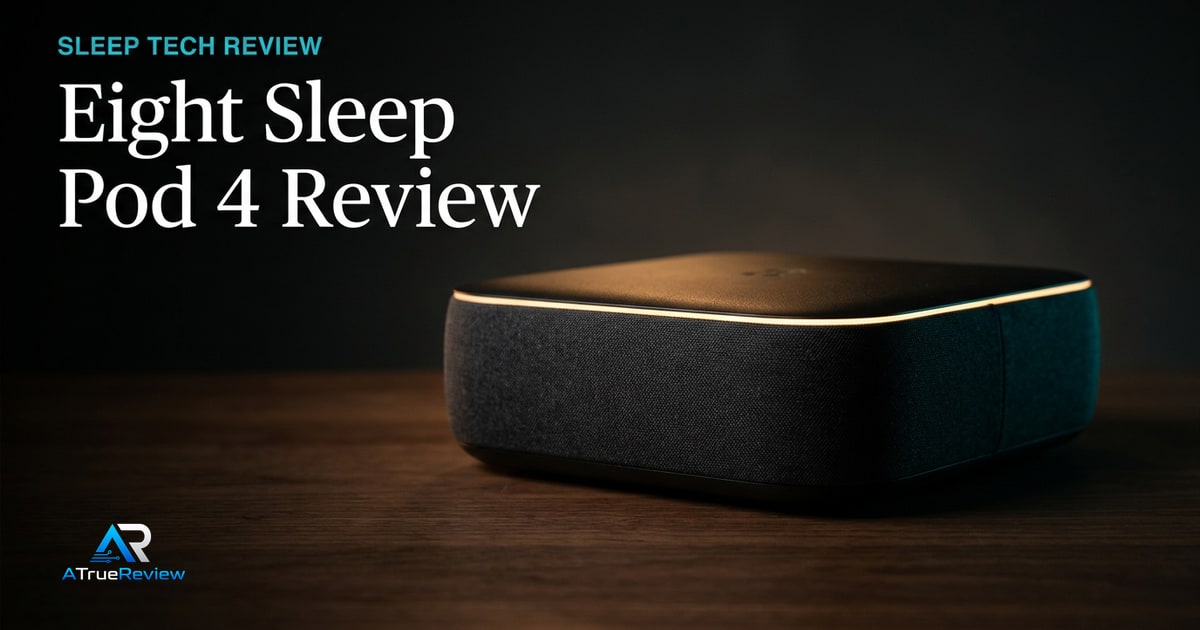
Sleep tech review
A review of Eight Sleep Pod 4, focused on bed temperature control, Autopilot subscription value, sleep tracking, setup burden, and whether the system is worth paying premium money for.
Verdict
Recommend with caveats
The strongest premium sleep-tech candidate for hot/cold sleepers, but only if temperature control is worth a full system purchase and subscription.

Best for
Readers with demanding routines who are willing to pay for sleep consistency and recovery quality.
Skip if
You are unsure about a high-cost sleep system, dislike subscriptions, or want a simple tracker rather than temperature-controlled bedding.
Test window
Launch brief based on Eight Sleep product documentation and external review context. Hands-on sleep testing is still required before final scoring.
Specs
Key findings
The Eight Sleep Pod 4 is unusual among sleep products because it is not a tracker. Most consumer sleep tech measures things — HRV, sleep stages, respiratory rate — and presents the data on an app the next morning. The Pod 4 measures all of those things too, but the actual product is the intervention: it circulates temperature-controlled water through the mattress cover, automatically through the night, on a per-side schedule.
That changes the buying question. Sleep trackers are easy to recommend cheaply because they are low-stakes. The Pod 4 is the opposite — it is one of the most expensive consumer sleep purchases available, with an ongoing subscription cost, real setup effort, and a hardware system that lives on your bed. The right buyer values sleep enough to pay for it; the wrong buyer wastes a lot of money buying it.
Temperature is the only reason to seriously consider this product. If a reader runs hot at night, freezes through winter, or shares a bed with a partner who has a different temperature preference, a bed-level temperature system can plausibly matter more than another wearable dashboard.
WIRED’s Pod 4 Cover review backs this framing: stronger comfort, quieter operation than earlier generations, tap controls, personalized temperature settings for each side, and Autopilot as central to getting the most from the system. The headline is the per-side temperature curve through the night — automatic warming early in the sleep cycle for sleep onset, cooling during deeper sleep, gentle warming before wake time. Done well, that curve actually does change how a hot or cold sleeper feels in the morning.
The sleep tracking via the Cover means no wearable is required to capture nightly data — useful for buyers who do not want to add a ring or watch to their routine. The vibration alarm and (with the Pod 4 Base) snoring-mitigation elevation are quietly innovative partner-friendly features that no traditional bed system offers.
That is the whole commercial question. The Pod 4 does not need to be cheap; it needs to solve a sleep problem that cheaper fixes cannot solve well enough.
If the buyer runs hot or cold every night, shares a bed with a partner who wants a different temperature, and has already tried the obvious room-cooling and bedding fixes, the premium starts to make sense. If the sleep struggle is mainly stress, schedule drift, or mattress comfort, the same money is much harder to justify here than on simpler bedroom or behavior changes.
Three real concerns deserve weighing before buying.
The Pod 4 is the right answer to a specific problem. If you do not have that problem, no spec sheet will convince you the product is worth the cost.
— The honest framing
First, the cost. The Pod 4 is one of the most expensive consumer sleep purchases available, and the required Autopilot subscription has multiple tiers — most of the headline features (automatic temperature curves, detailed sleep insights, snoring mitigation) live in the higher tiers. Treat the subscription as part of the purchase price.
Second, the setup and maintenance. The Hub sits beside the bed and contains the fluid reservoir and pump; setup involves draining and refilling with distilled water periodically. The pump cycles audibly when temperature changes are made. Most users adapt within a few nights, but light sleepers in dead-quiet bedrooms will notice it.
Third, the warranty model. Eight Sleep’s warranty is tied to an active Autopilot subscription — discontinue the subscription and you lose the warranty coverage. This is unusual in consumer hardware and worth understanding before purchase.
Before any final scoring, the site needs to test heat and cool responsiveness across realistic ambient conditions, pump and fan noise across multiple nights, app reliability, partner disruption (or lack thereof), setup time, cleaning and maintenance routine, subscription value, and whether actual sleep quality measurably improves over a multi-week test window.
Three real alternatives at different price tiers and philosophies:
ChiliSleep Dock Pro / Cube is the direct competitor — temperature-controlled mattress topper, similar fluid-circulation technology, no integrated sleep tracking, one-time purchase rather than subscription. The honest pick for buyers who want the temperature feature without the Eight Sleep ecosystem and ongoing payment.
BedJet 3 is the cheaper alternative — pushes warm or cool air through a hose into the bed area rather than circulating fluid. Less precise, no per-side control on a single bed, but a fraction of the price.
Tempur-Pedic Tempur-Breeze (or similar passive-cooling mattresses) is the no-electronics alternative. Designed to wick heat passively. Less dramatic effect, no per-side control, but no electronics on the bed and no subscription.
The Eight Sleep Pod 4 wins specifically when per-side automatic temperature curves through the night, integrated tracking, and partner-friendly features all matter — and when the reader is willing to pay the price-and-subscription premium for the integrated experience.
For shortlist context around that decision, the best sleep tech guide shows where Eight Sleep sits relative to passive trackers and lower-tech options, the sleep-tech category narrows the bedroom-only layer, and the wider health-tech hub helps buyers decide whether the real need is a bed system, a tracker, or a broader recovery setup. For a complete recovery-and-sleep setup, the Oura Ring 4 review covers the wearable side; for the office-and-focus environment, the Bose QuietComfort Ultra handles audio and the Dell UltraSharp U2725QE handles the desk.
If you sleep hot or cold, share a bed with a partner who has a different temperature preference, value sleep quality enough to pay for it, and have the budget for both the system and an ongoing subscription, the Pod 4 is the strongest premium sleep-tech recommendation. If your sleep issues are not temperature-driven, look at a tracker (the Oura Ring 4) or a routine change before paying for hardware. If temperature is the issue but the subscription bothers you, ChiliSleep is the no-subscription alternative.
The provisional verdict: the most compelling premium sleep system on the market, contingent on the buyer actually having the temperature problem the system solves. Final score depends on multi-week sleep-quality testing and noise/maintenance evaluation. For shortlist context, route back through best sleep tech, sleep tech, or the wider health-tech hub.
Verdict shape
Pros
Cons
Alternatives
FAQ
Yes, dramatically. The Pod 4 cover circulates temperature-controlled water just below the sheet, and the per-side range covers most realistic sleep preferences. Hot sleepers feel the difference within the first night. The combination of sustained per-side temperature plus Autopilot's automatic curves through the night is genuinely a different sleep experience.
Quieter than a refrigerator at idle, more audible when the pump cycles to change temperature. Most users adapt within a few nights, but light sleepers in dead-quiet bedrooms will notice it. Place the Hub on the floor (not a hard surface that resonates), keep the lid closed, and it becomes background noise.
For Autopilot — the automatic temperature curves through the night that are the actual selling point — yes. You can use the Pod 4 with manual temperature settings without the subscription, but you lose the feature most readers buy it for. Treat the Autopilot plan as part of the purchase cost.
Different products entirely. The [Oura Ring 4](/reviews/oura-ring-4-review/) tracks sleep and recovery; the Pod 4 tracks and intervenes. If sleep tracking is the goal and you have no specific temperature problem, a wearable is sufficient. If you wake up too hot or too cold, or you and your partner have different temperature preferences, the Pod 4 is doing something a tracker cannot do — actually changing the bed.
Strong, by design — independent left and right temperature zones are the headline. The vibration alarm also wakes one partner without disturbing the other, which is one of the better partner-friendly features in any sleep system. The honest caveat: both partners need to accept the Hub on their bedside, the maintenance routine, and the subscription cost.
About 55 F to 110 F (13 C to 43 C), with independent per-side control.
Yes. An Autopilot plan is required for most insights and the automatic temperature adjustments, and the warranty is tied to an active plan.
Twin XL, Full, Queen, King, and California King.
Heart rate, HRV, respiratory rate, snoring, and sleep stages, with vibration and thermal smart alarms.
It can raise elevation (with the Pod 4 Base) when snoring is detected; the Hub needs periodic distilled-water refills.