Best for
Who should buy it
Multisport athletes, ultra-runners, hikers, sailors, and recreational divers who want one wrist watch for everything and value Garmin's training depth and multi-week battery autonomy.
 Our Method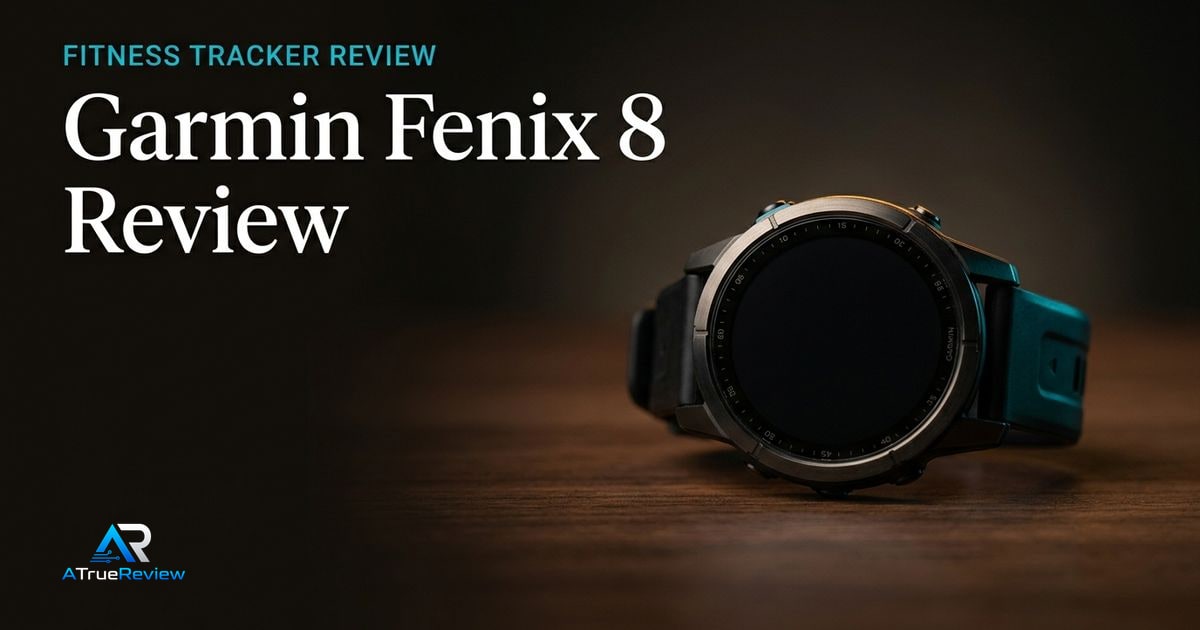
Smartwatch review
A review of Garmin Fenix 8 as a flagship adventure-and-multisport watch, focused on the new AMOLED display, dive-computer mode, microphone and speaker, multiband GPS, and whether it justifies the premium over Forerunner 965 or Apple Watch Ultra 3.
Verdict
Recommended
The most complete current cross-platform adventure and multisport watch — the cleanest one-watch answer for athletes who want depth, autonomy, and a non-Apple ecosystem.

Best for
Multisport athletes, ultra-runners, hikers, sailors, and recreational divers who want one wrist watch for everything and value Garmin's training depth and multi-week battery autonomy.
Skip if
You use an iPhone with no Android sympathy, you only run on roads, you want a wrist computer with apps and cellular, or the $999–$1,199 entry price is not justified by your actual outdoor use.
Test window
Launch brief based on Garmin product documentation and independent post-launch coverage. Hands-on multi-week wear, dive-computer accuracy at depth, microphone / speaker reliability in real conditions, AMOLED battery against the 16-day claim, and structured-training accuracy against chest-strap reference are still required before final scoring.
Specs
Key findings
The Garmin Fenix 8 is the most complete adventure-and-multisport wrist watch on the market in 2026, and it is also Garmin’s clearest answer to Apple Watch Ultra 3 to date. The story is hardware: a long-overdue AMOLED display option, an actual EN13319-certified dive-computer mode, a microphone-and-speaker pair for on-watch calls, and leak-proof inductive-sensor buttons that finally remove a long-standing weak point on the previous Fenix line. Underneath, the training stack stays the deepest in the category — multisport, ultra running, sailing, ski, golf, dive — and the multi-band GPS reads accurately enough to justify its position as the cross-platform athlete’s default.
It is also a hard-to-classify watch by price. The $999.99 entry and $1,199.99 most-recommended configuration sit well above Forerunner 965 territory and at parity with Apple Watch Ultra 3. The buying case has to be earned by actual use — dive weekends, multisport racing, off-grid trips longer than three days, or a hardware preference for cross-platform autonomy.
The AMOLED arrival is the single biggest shift on this line. For years the Fenix lineage has been an MIP transflective story — built for sunlight, multi-week battery, and outdoor readability over color accuracy. As Tom’s Guide notes in its launch review, the Fenix 8 finally lets buyers choose: AMOLED for vibrant color and night readability (16-day battery on the 47 mm), or Solar / MIP for multi-week endurance (21–28 days on the same case size). Both ship the same software stack; both pass through Garmin Connect identically. The Solar variant remains a real choice; the AMOLED is the new default for most buyers.
The dive mode is the second genuine differentiator. Per DiveIn’s 2026 review of the Fenix 8 as a dive computer, the watch is EN13319 certified to 40 m and ships with single-gas, multi-gas, gauge, apnea, freedive, and closed-circuit modes available depending on firmware. The depth gauge is built in. For recreational divers who do not want to carry a dedicated Descent MK3 alongside their adventure watch, the Fenix 8 is the cleanest one-watch dive story Garmin has ever shipped — and a feature the Apple Watch Ultra 3 cannot match.
The structural changes — built-in microphone and speaker for on-watch Bluetooth calls and voice notes, leak-proof inductive-sensor buttons that close the most common ingress weak point, an updated Elevate Gen 5 heart-rate sensor — read as a complete platform refresh rather than an incremental tick.
The GPS layer remains the quiet workhorse. Per DC Rainmaker’s in-depth review, the multi-band GPS L1 + L5 antenna with SatIQ adaptive accuracy reads cleanly against chest-strap heart rate and reference GPS units in trail running, dense urban canyons, ski-resort tree-cover tests, and open-water swims. For multisport athletes, this is the part of the watch that quietly justifies the premium — Garmin’s GPS implementation is still the bar every other manufacturer is measured against.
Conditionally. The Fenix 8 is a genuinely better watch than the Fenix 7, but most of the gains are evolutionary unless you specifically want one of the new pillars (AMOLED, dive mode, microphone-and-speaker, inductive buttons). Fenix 7 owners who are content with MIP and structured training should hold — the Fenix 9 is expected in late 2026 and may produce a cleaner upgrade leap.
Three Fenix 7 owner profiles where Fenix 8 reads as a clear yes:
For Garmin Forerunner 965 owners considering a Fenix 8 jump, the question is harder. The Forerunner 965 is the better pure-running watch, the better travel-weight pick, and almost half the price. The Fenix 8 only pays back the extra cost if the buyer actually uses the dive mode, multisport variety, or expedition-grade battery. See the Garmin Forerunner 965 review for the running-leaning alternative.
Two real limitations matter for buying decisions.
A four-figure adventure watch only pays back when the adventure is real. For buyers who run on roads and do not dive, the Forerunner 965 is the honest cheaper pick.
— The honest framing
First, the price ceiling. $999.99 entry and $1,199.99 for the most-recommended 47 mm Sapphire is a serious ask, especially when Garmin’s own Forerunner 965 covers most non-dive athletes for half the cost. Buyers who do not specifically need dive functionality, the Fenix size and case ruggedness, or multi-week battery should think hard about whether the premium maps to their actual use.
Second, the missing wrist-computer layer. The Fenix 8 has no cellular, no satellite messaging, no real third-party app ecosystem. Garmin Connect IQ is functional but thin, especially compared to Apple Watch Ultra 3’s app store and Apple Pay integration. Buyers whose use case includes leaving the phone at home and still wanting to send messages, take calls on cellular, or access third-party apps should look at the Apple Watch Ultra 3 review for the other side of the trade.
There are softer caveats too. The Garmin Connect platform UI continues to read as utilitarian compared to Strava’s social layer or Whoop’s coaching framing. The Fenix 8 lineup itself is large enough to make buying the wrong variant easy — AMOLED versus Solar, 43 versus 47 versus 51 mm, standard versus Pro. And the AMOLED variant’s 16-day battery still demands charging roughly twice a month under heavy GPS use, which is meaningfully better than Apple Watch but worse than the Solar variant.
Before any final scoring, the site needs to test multi-week wear on a real wrist, AMOLED battery against the 16-day claim under heavy GPS use, dive-computer accuracy at depth against a reference dive computer, microphone / speaker reliability in wind and pool environments, the leak-proof inductive button feel after several months, structured-training accuracy against chest-strap heart-rate reference, and the upgrade path against Fenix 7 owners.
Three real alternatives serve different buyers:
The Apple Watch Ultra 3 is the iOS-only daily-driver smartwatch with cellular, satellite messaging, ECG-and-hypertension health screening, and a richer app ecosystem. Trade-off: daily-ish charging, no real dive mode, weaker structured-training depth, iPhone-only.
The Garmin Forerunner 965 is the cheaper running-leaning Garmin — AMOLED, multiband GPS, full training metrics, no dive mode, no microphone, ~$599. The right pick when the buyer is a runner or duathlete and the dive / multisport breadth is not the point.
The Whoop 5.0 is the wrist recovery strap worn alongside a watch — no display, no GPS, deeper strain-and-recovery coaching. The right pair partner with a Fenix, not a substitute.
The Garmin Fenix 8 wins when the buyer actually uses multi-discipline adventure capability, wants cross-platform support, and values multi-week battery autonomy over cellular and app ecosystem polish.
For shortlist context around that decision, the best fitness trackers guide shows where Fenix 8 sits relative to Apple Watch Ultra 3 and Forerunner 965, the fitness-trackers category narrows the wearable-only layer, and the wider wearables hub helps buyers decide whether the right answer is a watch, a ring, a strap, or a broader sleep-and-recovery setup. For a complete recovery setup that pairs with the watch, the Eight Sleep Pod 4 review covers the bedroom-level upgrade.
If you train multisport, hike off-grid for days, dive recreationally, or want one cross-platform wrist watch that handles every adventure category Garmin covers, the Garmin Fenix 8 is the strongest current pick — particularly the 47 mm AMOLED Sapphire for daily-driver use or the 47 mm Solar Sapphire for genuine multi-week autonomy. If you are on iPhone and want the daily-driver smartwatch story with cellular and app ecosystem, the Apple Watch Ultra 3 is the honest alternative. If you are a pure runner without the multisport or dive needs, the Garmin Forerunner 965 is the smarter buy at half the price.
The provisional verdict: the strongest current cross-platform adventure-and-multisport watch recommendation, contingent on multi-week wear validation, AMOLED battery under heavy GPS use, dive-computer accuracy at depth, microphone / speaker reliability, and structured-training accuracy against a chest-strap reference. Final score depends on real-world wear and multi-discipline use evaluation. For shortlist context, route back through best fitness trackers, fitness trackers, or the wider wearables hub.
Verdict shape
Pros
Cons
Alternatives
FAQ
AMOLED if display quality matters more than absolute battery, which is most buyers in 2026 — the panel is bright, color-accurate, and night-readable. Solar (MIP) if you regularly do ultra-distance events or off-grid trips longer than two weeks where charging is hard, or if you simply prefer the lower-power transflective look. The 47 mm AMOLED Sapphire is the default recommendation for most readers; the 51 mm Solar Sapphire is the right pick for genuine ultra-endurance or expedition use.
Yes for recreational diving to 40 m. The Fenix 8 is EN13319 certified, has a depth gauge built in, and supports the dive computer modes you would expect from a recreational dive watch (single-gas, multi-gas, gauge, apnea, freedive). It does not replace a dedicated Garmin Descent or a primary technical-diving computer, but for the diver who wants one wrist device for daily wear plus weekend recreational dives, it is the cleanest one-watch story in the category.
Different categories of wrist device. Garmin Fenix 8 is the cross-platform multisport flagship — deeper training metrics, multi-week battery, full mapping offline, no ecosystem lock-in, and the dive mode. Apple Watch Ultra 3 is the iOS-only daily-driver smartwatch with cellular, satellite messaging, deeper health screening, and a richer app ecosystem. Most multisport athletes who can only own one watch choose by phone OS. iPhone owners lean Ultra 3 for daily-driver completeness; Android owners and many serious athletes lean Fenix for training depth. See the [Apple Watch Ultra 3 review](/reviews/apple-watch-ultra-3-review/) for the other side.
Only conditionally. The new features (AMOLED display option, dive mode, microphone / speaker, leak-proof inductive buttons, slightly refined heart-rate sensor) are genuine but evolutionary. Fenix 7 owners who specifically want AMOLED, dive functionality, or on-watch calls have a reason to upgrade. Fenix 7 owners happy with MIP battery autonomy and structured training should hold — the Fenix 9 is expected in late 2026 and may be a cleaner upgrade leap.
For pure runners, yes. The [Garmin Forerunner 965 review](/reviews/garmin-forerunner-965-review/) covers a smaller, lighter AMOLED Garmin at roughly half the Fenix 8 price, with the same training metrics, multiband GPS, and Garmin Connect ecosystem. The Fenix 8 only pays back the extra cost if the buyer actually uses dive mode, multisport variety, expedition-grade battery, or premium case materials.
Cleanly. Fenix 8 owners commonly wear an [Oura Ring 4](/reviews/oura-ring-4-review/) or [Whoop 5.0](/reviews/whoop-5-review/) alongside the watch — Garmin handles in-workout instrumentation and training plans, the ring or strap handles passive 24/7 recovery and sleep. Garmin Connect imports HRV and sleep data, but most users find Oura or Whoop produce more actionable daily recovery framing than Garmin Body Battery does on its own.
The Pro variant bundles every premium option (sapphire crystal, titanium bezel, larger storage, every map region pre-loaded) in one configuration. For most buyers, the standard Fenix 8 Sapphire at the right size is sufficient. The Pro is the right pick for buyers who want the ultimate one-time configuration decision and do not want to research case material trade-offs.
On the 47 mm AMOLED, up to 16 days in smartwatch mode; the 47 mm Solar reaches up to 21 days, or 28 days with solar charging.
43 mm, 47 mm, and 51 mm, in AMOLED or MIP (Solar) display options.
Yes. It is EN13319 dive-certified to 40 m with a depth gauge and is water-resistant to 10 ATM (100 m).
Yes. It has a built-in microphone and speaker for Bluetooth calls and voice assistant, plus leak-proof inductive buttons.
$999.99 to $1,199.99 depending on size, display, and case material.