Why the Virgo 811W was a budget-builder case first
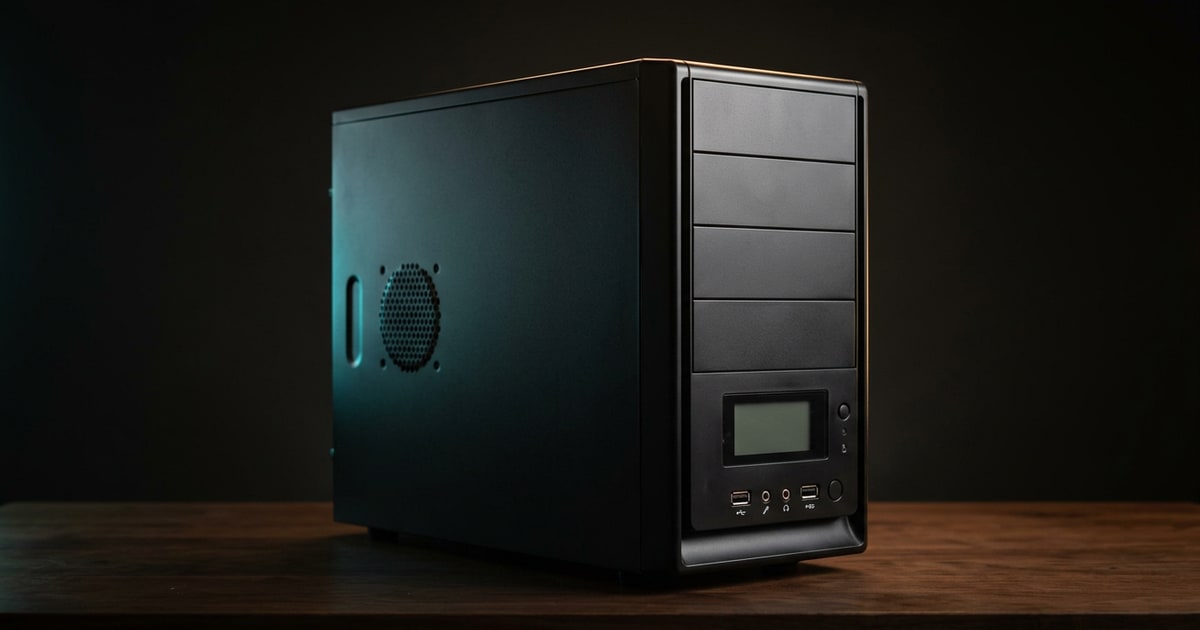
The Raidmax Virgo 811W belongs to the era when an inexpensive computer case could solve several build problems at once. The surviving Newegg listing frames it as a black steel ATX mid-tower with front USB/audio, a side air duct, a bundled 420W power supply, and a drive-bay layout built around optical drives and hard disks.Newegg
That explains why the old review was worth preserving. Techgage’s 2005 pickup of the ATrueReview review described the Virgo as a case aimed at budget consumers who had little money left after buying the core platform parts.Techgage In that context, the Virgo 811W was not trying to compete with premium aluminum towers. It was trying to finish a build.
The specs show how different case priorities used to be
The archived retail spec sheet tells the story clearly. The Raidmax ATX-811BP Virgo listed:
- steel ATX mid-tower construction
- 420W bundled power supply
- ATX motherboard support
- four external 5.25-inch drive bays
- two external 3.5-inch bays
- four internal 3.5-inch bays
- seven expansion slots
- front USB and audio
- side air duct
- an 8 by 17.8 by 17 inch chassis footprint
Those are not modern enthusiast-case priorities. They are 2005 priorities. Optical drives mattered. Multiple 3.5-inch hard drives mattered. Front-panel audio and USB still felt like visible conveniences rather than baseline assumptions.
Cooling was marketed differently then
The Virgo listing calls out a side air duct, a 120mm fan entry, temperature-controlled cooling fan language, and a front thermal display.Newegg That was a familiar pitch in the period: give the buyer visible signs of cooling intelligence, even if the overall chassis was not built around the open-front airflow logic common today.
That does not make the Virgo a bad historical case. It does mean a modern reader should not translate those features into a current airflow recommendation. The side duct and thermal display are context, not proof that the case belongs under modern high-heat hardware.
Why this case still belongs in the archive
PC Perspective’s May 2005 cases-and-cooling roundup also listed Raidmax Virgo 811W Case @ A True Review, which helps confirm the page’s place in the broader hardware-review record of that era.PC Perspective That is enough historical context to keep the page as a genuine retrospective rather than retire it.
The modern version should be clear about what it is preserving: the historical role of a complete budget tower, not a current buy recommendation.
Where to go next
If this page sent you here because you are actually building a new system, start with current PC cases and power supplies. Then check graphics cards, motherboards, and CPU coolers so the case and PSU are sized around real component requirements rather than an old bundled-value formula.
Bottom line
The Raidmax Virgo 811W case is best understood as a practical, budget-era ATX tower. It bundled the basics, looked more feature-rich than a bare box, and gave low-cost builders a way to finish a system without separately shopping every enclosure detail.
For modern builders, the answer is different. Use this page as a historical reference or retro-build context. For a new PC, buy a current airflow-focused case and a separately reviewed power supply.