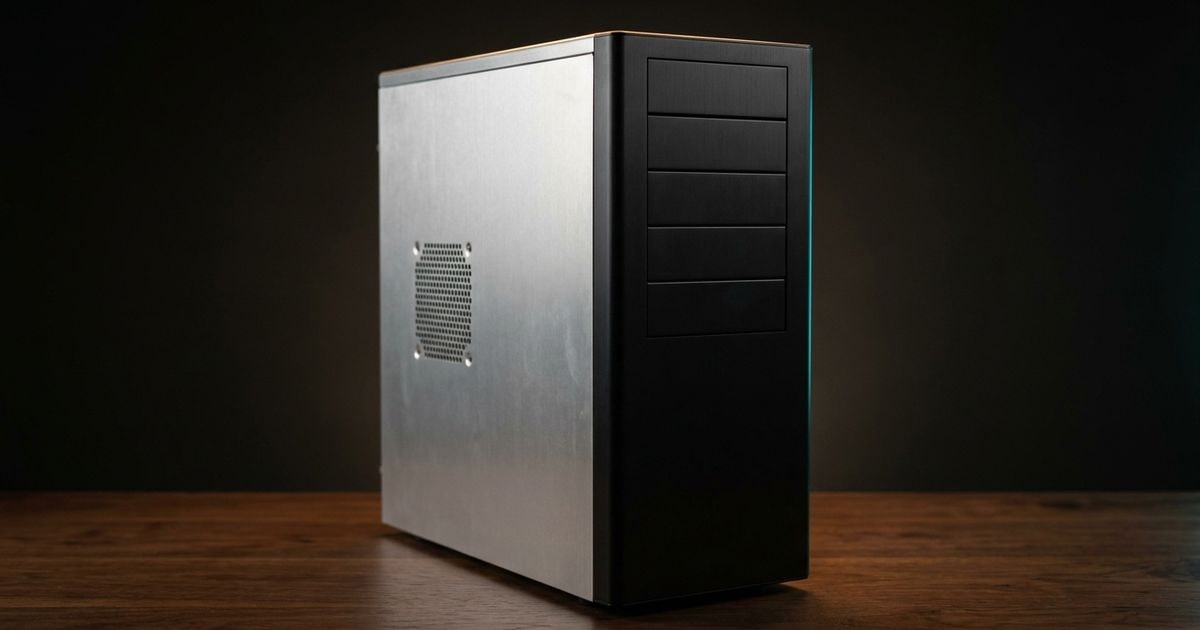
The iStar Nitro AX was built for utility first
The iStar Nitro AX case is easier to respect now than many of its louder contemporaries because it did not depend on novelty alone. PCStats framed it as a full tower steel chassis with room for multiple hard drives, sliding trays, and a removable motherboard tray, plus a design that tried to balance cooling with lower noise.PCStats
That matters because it tells you what kind of buyer this case was aimed at. The Nitro AX was not trying to win on front-panel spectacle. It was trying to feel substantial, usable, and a little more mature than the average gamer case of its era.
What the size bought you
The biggest strength of the Nitro AX full tower case was straightforward capacity.
Archived review coverage points to:
- room for multiple 3.5-inch drives
- multiple optical-drive positions
- compatibility with full-size ATX-class boards
- a chassis large enough to feel like a real tower rather than a dressed-up mid-tower
That does not sound especially glamorous now, but it was a real selling point then. A larger case gave builders more breathing room, easier assembly, and more freedom around storage-heavy systems. For buyers building workhorse desktops or enthusiast rigs before the SSD era fully changed the equation, that kind of space mattered.
The Nitro AX’s practical appeal
One of the most interesting details in historical coverage is the way the iStar Nitro AX case review conversation leaned toward noise and airflow rather than pure styling. PCStats specifically called out the vented side panel and fan-duct logic as part of the case’s design story.PCStats
That does not mean the Nitro AX behaves like a modern airflow-optimized tower. It means iStar was at least speaking to a more practical concern than “does the front panel look extreme enough?” That alone gives the Nitro AX a different tone from many surviving cases in the same time window.
Where it falls short now
The case still shows its age.
For a current buyer, the obvious limitations are:
- an internal layout built for a different hardware era
- less refined cable routing than even average current towers
- more mass and bulk than many people want today
- fewer reasons to choose a legacy full tower unless you specifically value retro hardware or internal drive space
That means the Nitro AX is not a sleeper modern recommendation. It is a case-history piece that can still make sense in the right used-build scenario.
What current builders should take from it
The useful lesson from the Nitro AX is that room matters, but room alone is not a modern case strategy. A current full tower should justify its size with GPU clearance, radiator support, cable-management depth, storage layout, airflow control, and service access.
If the Nitro AX appeals because it is large and practical, compare it against current PC cases and best PC cases. Then check motherboards, CPU coolers, and graphics cards so the case is chosen around actual component fit.
Bottom line
The iStar Nitro AX case was at its best when you treated it as a serious, roomy, no-nonsense full tower with just enough airflow-minded thinking to avoid feeling primitive. Its strengths were physical practicality, storage capacity, and a calmer visual identity than many rivals.
That profile still makes it interesting now. Not because it beats current towers, but because it shows how some older cases aged better when they cared about utility first and flash second.