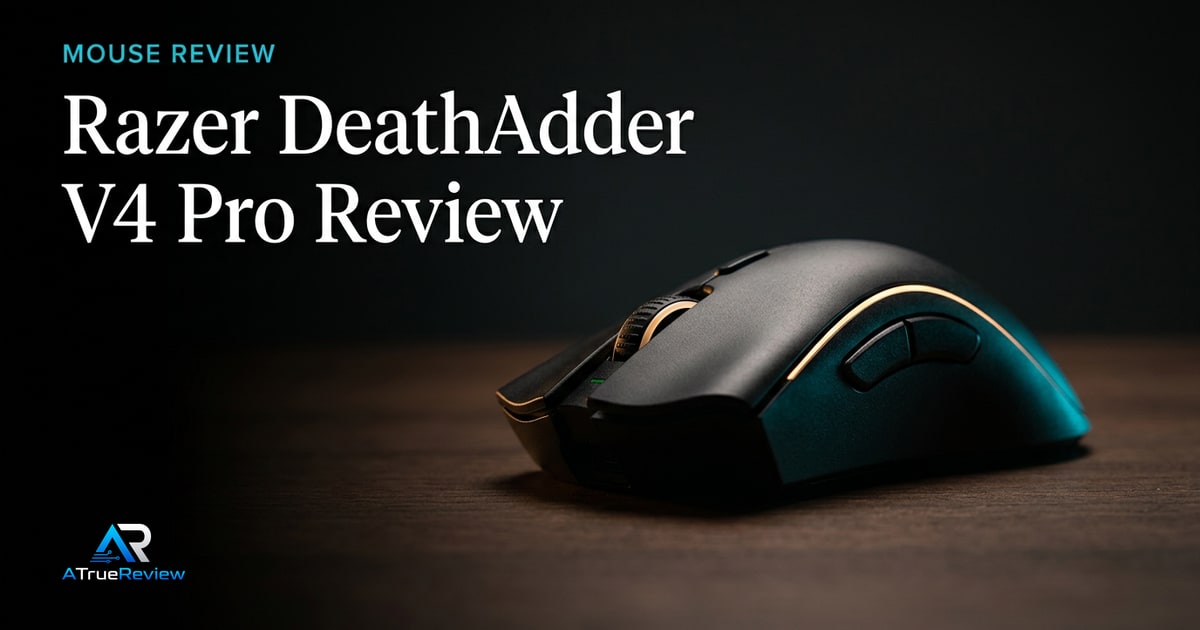
Featured review
Razer DeathAdder V4 Pro Review
A review of the Razer DeathAdder V4 Pro, focused on whether its ergonomic esports shape, 8K polling stack, and flagship Razer platform are worth paying for in a real hand.
Read the review Our Method
Shape, sensor, and control
A category page for readers choosing between ergonomic, symmetrical, ultra-light, and esports-focused gaming mice without turning every DPI claim into a buying reason.
Buyers narrowing by grip style, hand size, wireless performance, battery tradeoffs, and whether high polling rates actually matter for their setup.
Keep the tone calm and decisive so the hub feels like a navigation layer, not a spec dump.
Featured review
A review of the Razer DeathAdder V4 Pro, focused on whether its ergonomic esports shape, 8K polling stack, and flagship Razer platform are worth paying for in a real hand.
Read the review
Lead guide
A buying guide for gaming mice, focused on shape, weight, polling-rate tradeoffs, wireless performance, software friction, and matching the mouse to the player instead of chasing spec maximums.
Open the guideCategory frame
Gaming mouse buying should start with fit and control before spec maximums. A mouse can have excellent sensor numbers and still be wrong if its shape, coating, side-button placement, battery behavior, or software workflow fights the player.
Picks on this page separate competitive-performance claims from daily comfort and tie every recommendation to a specific hand shape, grip style, and tolerance for software.
Use this page to narrow the mouse problem before jumping into one review or a broader shortlist.
This category is most useful when the buyer already knows their hand size and grip preference and now needs to avoid buying the wrong shape or spec tier for daily play.
This is the cleaner way to buy a gaming mouse. Do not ask which one wins a spec-sheet argument. Ask which one will still feel controlled after a long session, not just exciting in a quick demo.
Mouse research is usually the wrong next step when:
In those cases, the better move is often fixing the actual control or desk problem before replacing the mouse.
For a product-level buying verdict, start with the Razer DeathAdder V4 Pro review. For shortlist logic across the category, open best gaming mice. Mouse buying also touches the rest of a gaming setup: check ergonomic keyboards for input comfort, gaming headsets for comms and positional audio, and the wider computing hub when the whole desk still needs shaping.
Reviews in this category
Category pages should help readers move from general interest into a smaller set of decisive editorial calls.