Why the Sunbeam Trio still gets searched
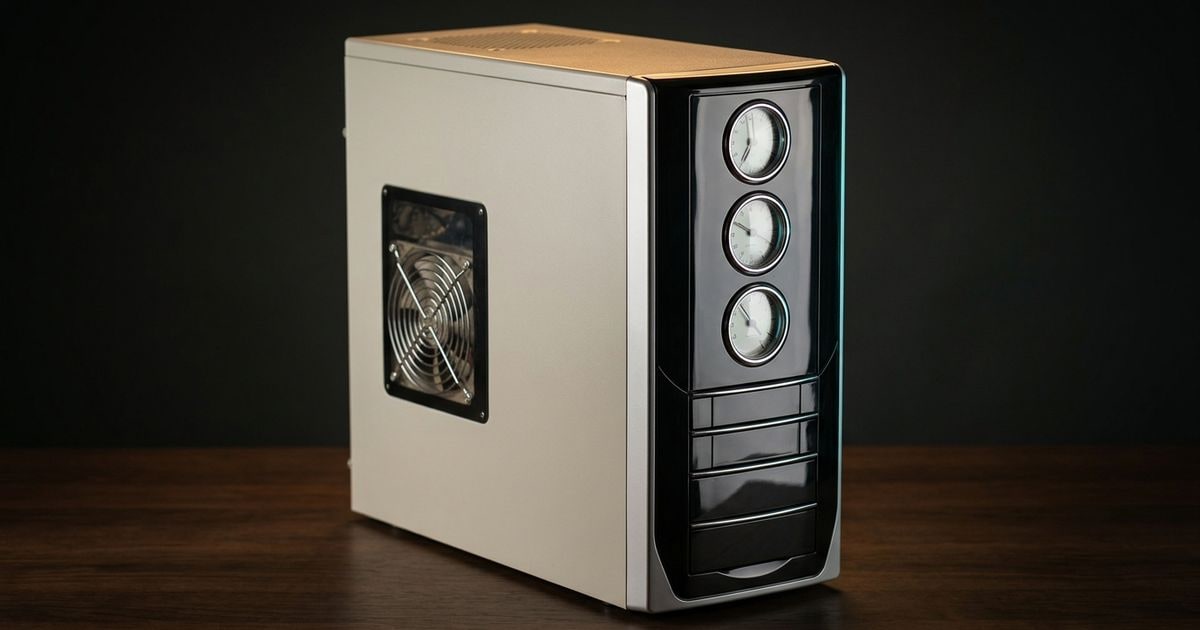
The Sunbeam Trio case remains interesting because it came from a period when enthusiast PC cases were trying hard to look like enthusiast hardware. The front panel was the hook: three analog gauges, a more theatrical fascia than the average budget tower, and enough styling confidence to make the case memorable even before you judged the internal layout.
That mattered in context. AnandTech’s mid-tower roundup described the Trio as one of the cheaper entries in the field, while still noting how visually distinctive it looked compared with plainer alternatives.AnandTech Bjorn3D made the same basic point more bluntly: the Sunbeam Trio’s first job was to catch your eye.Bjorn3D
What the product listing tells us
The historical Newegg listing for the Sunbeam Trio computer case frames it as a steel ATX mid-tower with:
- front USB and audio connectivity
- multiple external drive bays
- multiple internal 3.5-inch bays
- a bundled power supply on at least some SKUs
That spec mix is a reminder of how much the market has changed. In the mid-2000s, a case like this was selling convenience, styling, and feature density. Today, many buyers would prioritize GPU clearance, radiator fit, cable channels, and mesh airflow before almost anything else.Newegg
The real appeal: character
The smartest way to evaluate the Sunbeam Trio case review question is not to ask whether this was the best-engineered case of its era. It probably was not. The more useful question is whether it delivered enough personality to justify the compromises that came with a style-led mid-tower.
That answer is yes.
The Trio had a clear personality:
- the analog gauges gave the front panel a distinct identity
- the glossy finish and door treatment leaned hard into gamer styling
- the side window made it feel more enthusiast-oriented than generic office towers
For a lot of buyers at the time, that was enough. The case did not need to be a perfect airflow machine. It needed to feel like a “real” gaming build enclosure without stepping into premium pricing.
Where it ages poorly
This is where honest retrospection matters. The Sunbeam Trio case does not become better just because it is now retro.
Compared with a competent modern case, the weaknesses are predictable:
- less thoughtful airflow by today’s standards
- more emphasis on exterior styling than internal flexibility
- front-panel design choices that look cool but add visual and mechanical complexity
- less room for the oversized coolers, GPUs, and routing expectations of current enthusiast builds
That means the case has two real audiences left: retro builders and readers researching a memorable early-2000s chassis.
What current builders should take from it
The Trio is a useful warning about feature-first case shopping. A dramatic front panel, gauges, windows, or lighting can make a build memorable, but current hardware still needs airflow, clearance, cable routing, and a trustworthy separate power supply.
If the draw is visual character, start with current PC cases and then verify power supplies, graphics cards, and CPU coolers before committing to a style-led chassis.
Bottom line
The Sunbeam Trio case is worth revisiting because it captures a specific phase of PC hardware culture: the moment when mainstream mid-towers started trying to look custom, theatrical, and proudly visible on a desk. If you judge it by modern engineering priorities alone, it is easy to dismiss. If you judge it by what it was trying to be, it still makes sense.
It was not the cleanest chassis. It was one of the most characterful.